NFC Business Cards UK: The Complete Buyer's Guide (2026)
UK buyer's guide to NFC digital business cards in 2026: materials, supplier checks, delivery, costs and subscription choices.
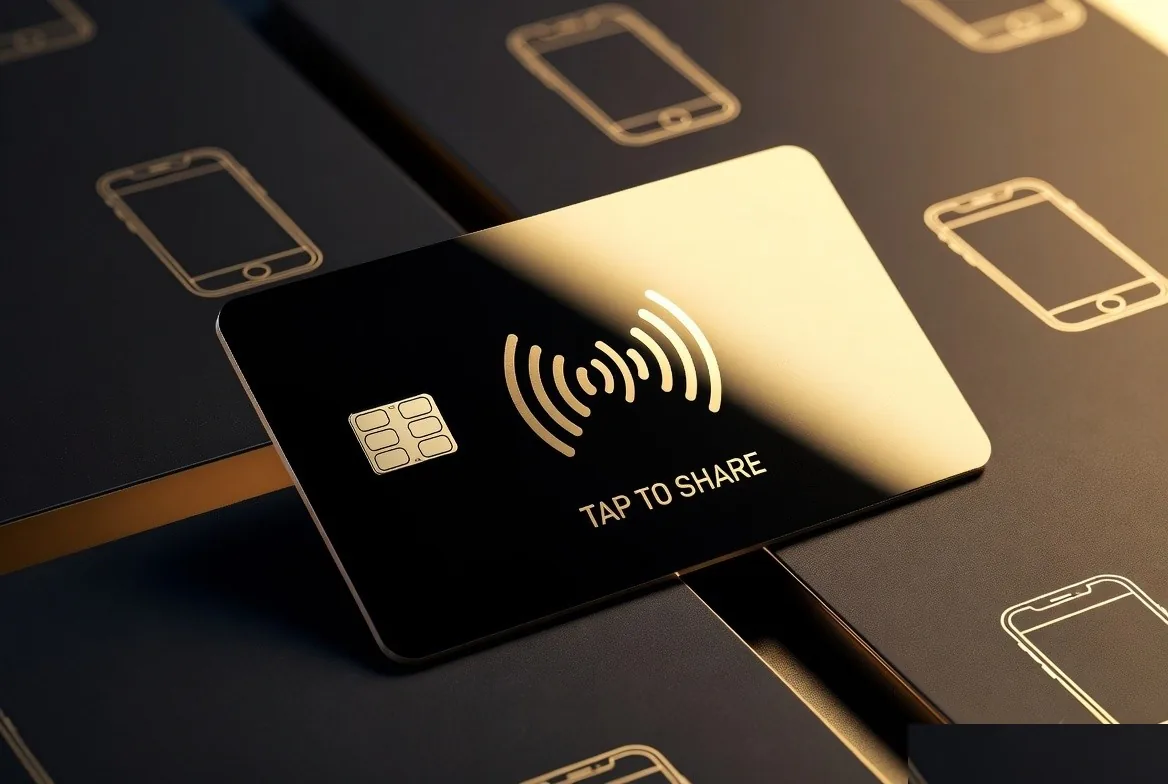
An NFC business card is a physical card with a passive chip inside that opens your UK digital business card profile when tapped on a phone. In the UK you can expect to pay around £20 for a printed PVC card and around £100 for metal, and the decision that matters most is whether the platform behind the card charges you once or every month.
Key takeaways
- The chip is cheap and standardised; the profile platform behind it is what you are really buying.
- PVC suits volume handouts, wood suits craft and eco brands, metal suits one-to-one senior meetings.
- Check whether your profile keeps working if you stop paying - subscription lock-in is the main UK buying risk.
- Most cards can be reprogrammed unless the chip has been deliberately locked.
- Always insist on a printed QR fallback so the card still works on phones without NFC.
What is an NFC business card?
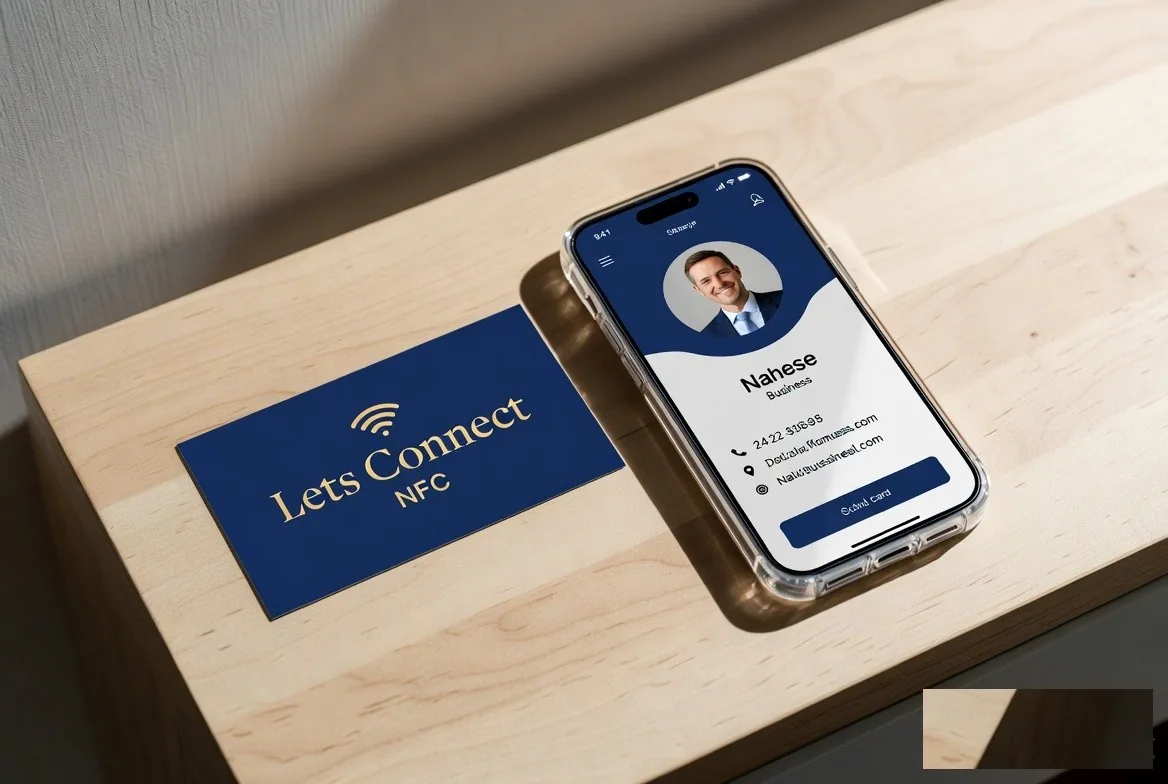
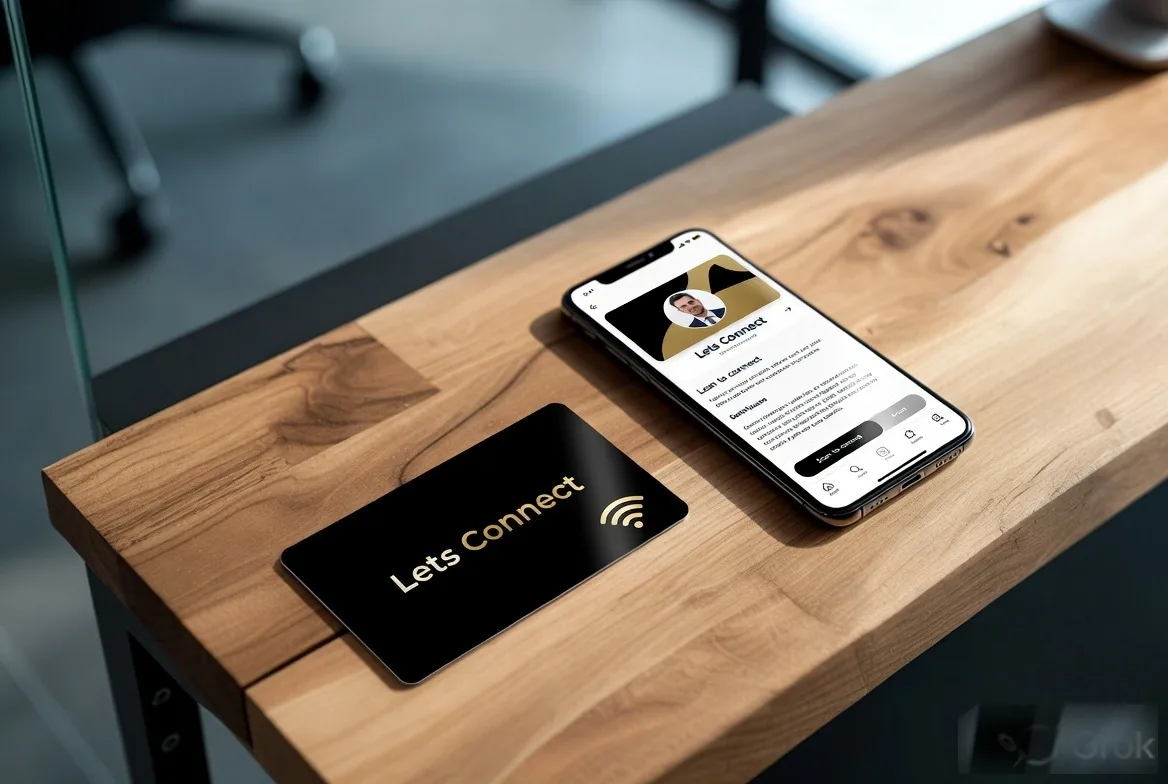
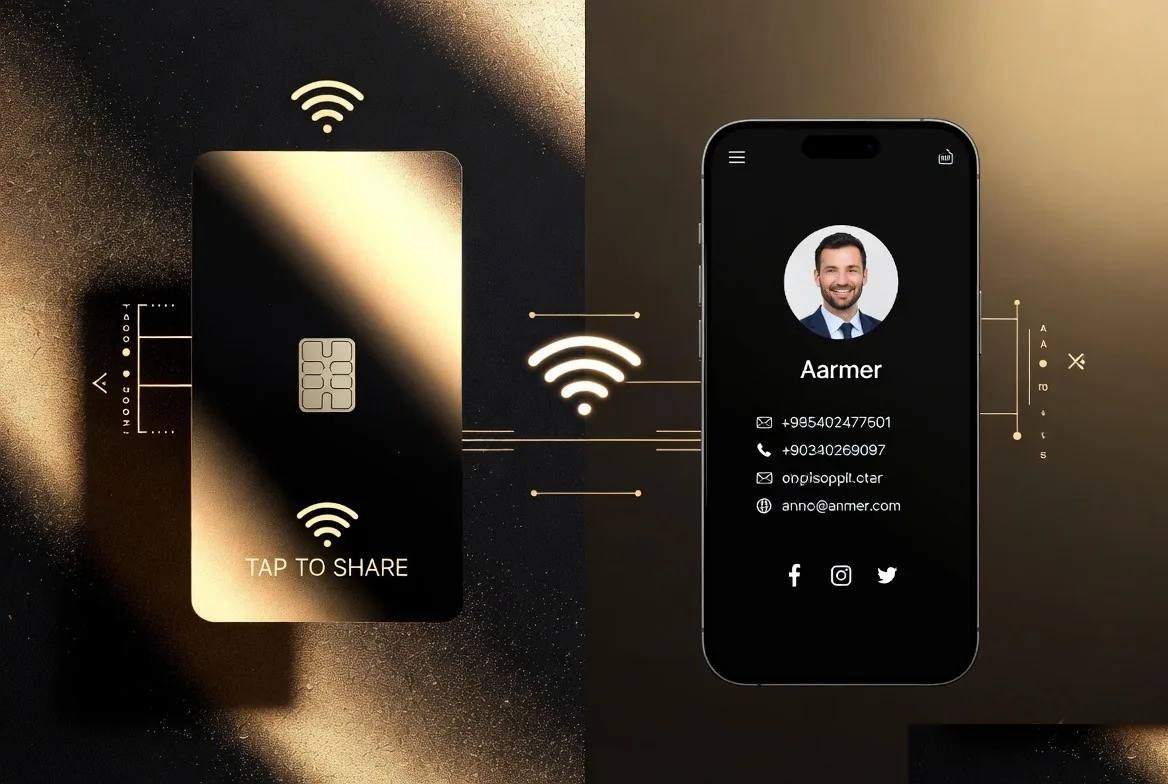
A physical card in plastic, metal or wood with a tiny NFC chip and antenna laminated inside. Tap it on the back of a modern phone and a web profile opens: no app to install, no battery inside the card and nothing to charge. The chip itself stores only a short URL, which is why your details stay editable forever. The mechanics are covered in more depth in our explainer on how NFC business cards work.
Which material should you buy?
Here is the short version - for the full breakdown see metal vs PVC vs wooden NFC cards.
| Material | UK price | Best suited to | Watch out for |
|---|---|---|---|
| PVC | £20 | Volume handouts, events, sales teams | Looks like a bank card rather than a statement piece |
| Wood | £50 | Creatives, eco and craft brands, consultants | Print finish is warmer and less vivid than PVC |
| Metal | £100 | Senior roles, luxury brands, high-ticket sales | Heavier in a wallet, and you will not hand many out |
PVC (plastic)
- Best value at £20
- Full-colour print on both sides, similar feel to a credit card
- Light enough to carry a few at once
- Suits anyone giving out cards in volume
Metal
- £100 in the UK with Lets Connect
- Weight and finish carry the strongest first impression
- Etched or printed detail rather than photographic artwork
- Suits meetings where you hand over one card and expect it to be kept
Wooden
- £50 in the UK with Lets Connect
- Natural material, distinctive at a busy event table
- Reinforces sustainability or craft positioning
- Suits creatives, trades and independent consultants
What to look for in a UK supplier
The platform behind the card
Two cards can be physically identical and worth wildly different amounts, because the chip points at somebody's software. Before you buy, check that you can edit every field yourself, add links and attachments, and export your leads as a file rather than being locked into a dashboard.
Ten practical checks
- Does the profile stay live if you stop paying, or does the card go dead?
- Is the URL short, branded and stable, so a printed QR keeps working for years?
- Can you re-point the chip yourself, or does the supplier control it?
- Is there a printed QR code on the card as a fallback?
- Can you export contacts and leads to CSV?
- Is there UK-based support and a UK company behind the brand?
- Is there a written refund or guarantee period?
- Do analytics show views and link taps, not just a total?
- Can you add an Apple Wallet or Google Wallet pass?
- If you manage a team, can one admin edit every profile from one place?
Will NFC business cards work with iPhones?
Yes. Every iPhone from the iPhone XS (2018) onwards reads NFC tags in the background with no app installed. Most Android handsets have read NFC for over a decade, though some budget models omit the hardware entirely, which is the whole reason a printed QR belongs on the card. If you are an iPhone user setting up for the first time, the iPhone setup walkthrough covers Wallet passes too.
UK delivery and cost expectations
With Lets Connect, the digital profile is free forever and the full platform is unlocked with a one-time lifetime plan: £49 Full Brand Presence or £99 Business Add-ons, with no subscription on an individual card. Physical cards are PVC £20, Wooden £50 and Metal £100, with free UK delivery on UK orders over £100. Lifetime pricing is a limited-time launch offer.
Budget for the design stage as well as the card. Printed cards are produced in batches, so a proof approval adds time before anything ships.
Does an NFC card lock you into a subscription?
On many platforms, yes, and this is the single biggest difference between suppliers. The card is sold as hardware, but the profile it opens sits on a monthly plan. Stop paying and the link either shows an upgrade prompt or stops resolving, which turns a metal card you paid three figures for into a coaster.
A one-time lifetime plan removes that risk: you pay once and the profile keeps working. If you are comparing suppliers on price, compare five years of subscription against a single payment, and check the full UK price list rather than the headline monthly figure.
How does reprogramming work?
Changing where the card points
The chip holds a URL, so reprogramming means writing a new URL to it. Most Android phones can write to an NFC chip natively; on iPhone, writing needs a third-party NFC app, since Apple does not expose native tag-writing in Safari. Platforms with built-in NFC tools let you write, read and verify a card from the browser or app on supported devices. If the chip has been locked at manufacture for security, it cannot be rewritten, so ask whether locking is optional before you order.
When you do not need to reprogram
Most changes never touch the chip. New job title, new mobile number, new booking link or a whole new company: edit the profile and every card that points at it updates instantly. Reprogramming is only needed if you move platform or want the card to open a different profile entirely.
How to test a card the day it arrives
- Tap it on the back of an iPhone near the top, and on the centre-back of an Android, and confirm the notification appears
- Open the profile and check every phone, email and social link actually resolves
- Scan the printed QR code with a plain camera app, not a QR app
- Save the contact to your own phone and confirm the vCard fields land correctly
- Add the wallet pass and check the details on the pass
- Hand it to a colleague on a different handset and watch them use it unprompted
Do this before your next event, not at it. If anything fails, Lets Connect's 30-day money-back guarantee covers you if anything is wrong.
What happens when you change job or number?
Nothing physical. Sign in, change the fields, save. The card in your wallet is unchanged and now shares your new details. Paper cannot do this: a box of printed cards becomes waste the day your number changes, while an NFC card survives the move. If the card was bought and administered by an employer, though, the profile usually belongs to them and can be reassigned, so keep a personal card in your own name if your network is your own asset.
Buying a card that outlasts your current job
The card is the durable part, so treat the printed side as long-term. Print your name, a role description that will still be true after a promotion, and the QR code. Leave off the direct dial that changes with every office move and the job title that changes with every restructure, because those belong on the profile where you can edit them.
The same logic applies to the URL. A short personal link survives a company rebrand; a link built around a campaign or a product name does not. Get that decision right before the print run and the card stays useful for years.
Rolling cards out across a team
Order in one batch, not one at a time
A single batch keeps artwork, finish and chip type consistent, and it means every card arrives before the event you bought them for. Agree the layout once, then apply it to every seat rather than letting each person design their own.
Keep control of the profiles
For a team, the useful test is whether one administrator can edit every profile from a single dashboard. That is what lets you correct a wrong office number across twenty cards in one go, reassign a profile when somebody leaves, and keep branding aligned. Sales-led teams should also check that leads land in a shared list rather than in twenty separate phones, which is the point of digital cards for sales teams.
Common mistakes UK buyers make
- Buying on card material first and discovering the platform pricing afterwards
- Choosing a long branded URL that makes the printed QR dense and harder to scan
- Ordering metal for a team that hands out cards at volume, then rationing them
- Skipping the printed QR to keep the design clean, then meeting someone with no NFC
- Locking the chip before the profile URL is finalised
- Not checking whether leads can be exported before committing to a platform
- Printing a job title that is about to change instead of a role that will not
None of these are expensive to avoid, but all of them are expensive to fix after a print run.
How to choose
- Hand out a lot? Start with PVC.
- Want to impress one prospect at a time? Get a metal card.
- Brand built on sustainability or craft? Wood.
- Team of five or more? Lets Connect Teams is £24.99 per seat per month or £249 per seat per year, minimum 5 seats.
- Not sure yet? Use the free Lets Connect profile and its QR code for a fortnight before ordering a card.
Frequently asked questions
Do NFC business cards need an app?
No. Tag reading is built into iOS and Android, and the profile opens in the phone's browser. Neither you nor the recipient installs anything.
How long does an NFC card last?
The chip is rated for far more taps than a card will ever see in normal use, so the card body wears out first. Metal outlasts PVC, and wood sits between the two.
Can I have more than one card for one profile?
Yes. Multiple cards can point at the same profile, which is useful if you want a metal card for meetings and a PVC card in your car or laptop bag.
Are NFC cards secure?
The chip only ever emits a URL. It cannot read anything from the recipient's phone and cannot carry a payload beyond that link.
Do I still need paper cards?
A small stack is worth keeping for formal settings and venues with no signal. Most people find they reach for them rarely once the tap becomes habit.
Whichever material you pick, the profile is the same and it is editable forever. If you are still weighing up whether are NFC business cards worth it? for your situation, that guide breaks down the real costs and payback time.
Your UK Digital Business Card With Lets Connect
If you are buying an NFC card in the UK in 2026, the smartest move is to pair the card with a platform you only pay for once. Lets Connect is UK-built and currently runs limited-time lifetime pricing on its individual paid plans. It is a UK company (Lets Connect Card LTD, Wolverhampton).
- Physical cards (UK delivery): PVC £20, Wooden £50, Metal £100. Every card includes the NFC chip and a printed QR fallback, and is covered by a 30-day money-back guarantee.
- Full Brand Presence - £49 one-time covers the full profile suite - blog, products, testimonials, gallery, attachments, 40+ templates, password protection, visibility controls and analytics.
- Business Add-ons - £99 one-time (most popular) adds the Kanban CRM, AI Business Card Scanner, Get Reviews engine, Bookings, Enquiries, Lead Capture, Custom Form Builder, Data Export and Location Tracker.
- Want to test the dashboard first? Start on the free Lets Connect plan - profile, social links and a QR code, free forever.
More UK NFC guides on the Lets Connect blog, full price list on the pricing page, or create your free digital business card in 3 minutes.
Put this guide into practice
To inspect or change a compatible tag’s stored link, see nfc tools. The guide explains the setup and which plan includes it.
To collect the other person’s details during the exchange, explore lead capture. The guide explains the setup and which plan includes it.
To keep the conversation, activity logs and next task together, use the built-in crm. The guide explains the setup and which plan includes it.
Start with your free digital business card, then choose paid tools only when your workflow needs them.
Why Lets Connect is the best digital business card
- Free to start: a digital card with your own link and QR code, no card details needed.
- Pay once: lifetime plans, no card subscription.
- The follow-up is built in: lead capture, a CRM, a card scanner, bookings, forms and review links in one dashboard.
- No app on either side: it opens in the browser on iPhone and Android.
- 5.0on Google from 17 reviews
- 5.0on Trustpilot from 9 reviews
- 99.4% positiveon eBay from 239 ratings